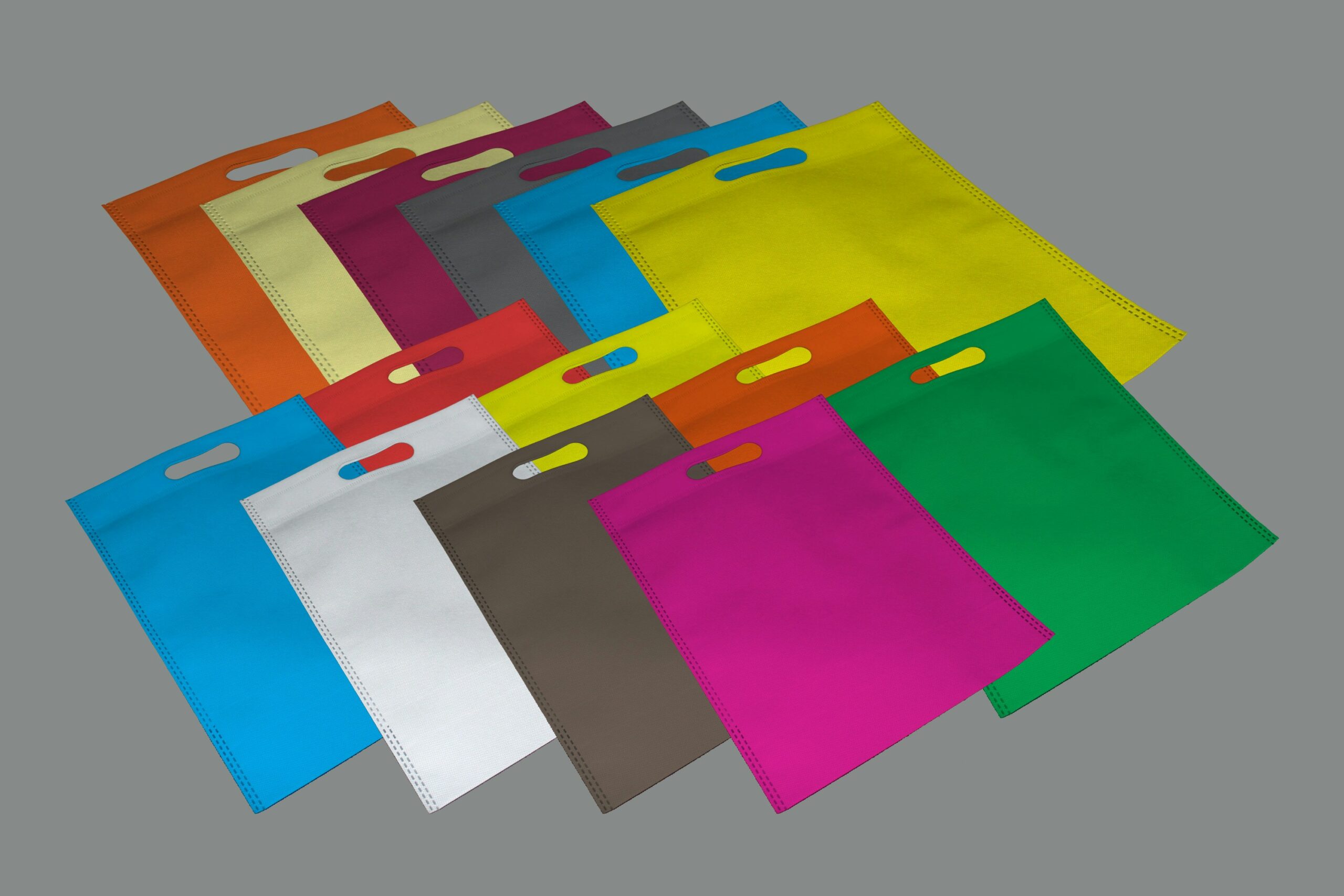
Non woven carry bags are presently being used all over India, particularly in industrial towns such as Panipat, due to their sturdiness, eco-friendliness, and good looks. Knowledge about the production process is a must for buyers, retailers, and any Panipat non woven bags manufacturer looking to compete with others in this emerging market. This article explains how non woven carry bags are manufactured, why they are special, and why Hanupackaging Industries—and other non woven bags makers near me—ought to emphasize quality and eco-friendly practices.
Major Characteristics of Non Woven Carry Bags
Tear Resistance and Weight: Non woven carry bags are extremely resistant to tearing and can withstand a considerable weight load, which makes them perfect for frequent use in daily shopping and transportation.
Lightweight and Porous: In contrast to woven bags, non woven carry bags are extremely light and are even porous in many cases, preventing moisture accumulation among the stored items.
Eco-Friendly
Most non woven bags are reusable and recycle-friendly, with some types biodegrading after a while, which means lower environmental footprints compared to plastic.
Customization: Companies have logos and designs printed on them for marketing purposes, providing extensive options regarding shapes, sizes, and colors.
How Are Non Woven Carry Bags Produced?
Polypropylene (PP) pellets are melted and converted into continuous fibers.
Such fibers are bonded into non woven sheets of fabric without weaving.
The fabric is cut, molded, and sealed (usually with heat or sewing) to make carry bags, which can be further personalized as required.
The Manufacturing Process Explained
The non woven bags manufacturer in Panipat uses advanced processes and machinery to produce high-quality carry bags. The following steps outline the typical production flow
Material Preparation—Polypropylene Granules
Manufacturers begin by sourcing polypropylene granules, which are the fundamental raw material.
- These granules are melted and extruded to form a web of fibers, creating non woven fabric rolls in the desired GSM (generally 75-150 for shopping bags).
Fabric Construction and Quality Check
The web is formed into flat rolls or sheets by spun-bond technology.
Quality inspections checks to make sure the non woven fabric conforms to strength, thickness, and smoothness standards.
Cutting to Size
The dimensions are decided by the Panipat non woven bags manufacturer as per customer requirements.
The roll of fabric is fed into an automatic or semi-automatic cutting machine, which cuts it into accurate sizes (length, width).
Printing and Branding
- When branding is necessary, the pre-cut items go through a printing machine.
- Flexography, screen, or heat transfer are used by machines to imprint logos, designs, and messages.
- Plain bags are preferred by some customers, with this step avoided.
Handle Attachment
- Handles—typically D Cut, W Cut, or U Cut—are secured through hydraulic sealing, ultrasonic sealing, or hand stitching based on bag design.
- Handles are stamped, sealed, or stitched to make them strong, thus they are necessary for transporting heavy loads.
Sealing and Stitching
Edges are sealed through heat or ultrasonic techniques, without the use of thread.
- Stitching can be done on some models, particularly patch handle or loop handle models, to provide greater carrying capacity.
Final Finishing and Quality Inspection
- Every bag is inspected with great care for stitching, colorfastness, finish, and capacity.
- Manufacturers of non woven bags around me take the guarantee that only defect-free bags enter the market.
Packing and Shipping
Non woven carry bags are weighed, packed, and shipped to distributors, retailers, and industrial customers locally and across the country.
Applications & Benefits
The bags are applied for shopping, packaging, promotional activities, agriculture, and others.
- Non woven bags manufacturer in Panipat provides sustainable products, reusable and recyclable, to achieve sustainability targets.
- Companies prefer non woven bags for durability, customization, and nice looks.
Popular Bag Types in Panipat
D Cut Non Woven Bags—for grocery and retail stores, soft handle.
- U Cut and W Cut Bags—ideal for diversified retail applications, lightweight.
- Loop Handle and Patch Handle Bags—for heavy shopping, clothing, and gift giving.
Why Choose Hanupackaging Industries?
Any leading non woven bags manufacturer in Panipat such as Hanupackaging Industries excels by:
- Employing superior quality polypropylene for strength and durability.
- Employing automated cutting and sealing for uniformity.
- Providing bulk production and customization with eye-catching printing.
- Standing by quality checks and green practices.
Finding Non Woven Bags Manufacturers Near By Me
When finding trusted non woven bags manufacturers near by me, seek those who:
- Employ open pricing and quality certifications.
- Maintain a diversified product line—shopping, packaging, customized branding.
- Provide on-time delivery and large after-sales assistance.
Conclusion
Non woven carry bag manufacturing is a streamlined process combining modern technology and quality control to deliver eco-friendly, versatile bags across markets. Whether partnering with a non woven bags manufacturer in Panipat or seeking non woven bags manufacturers near by me, choosing experts like Hanupackaging Industries ensures access to durable products customized for every need.